
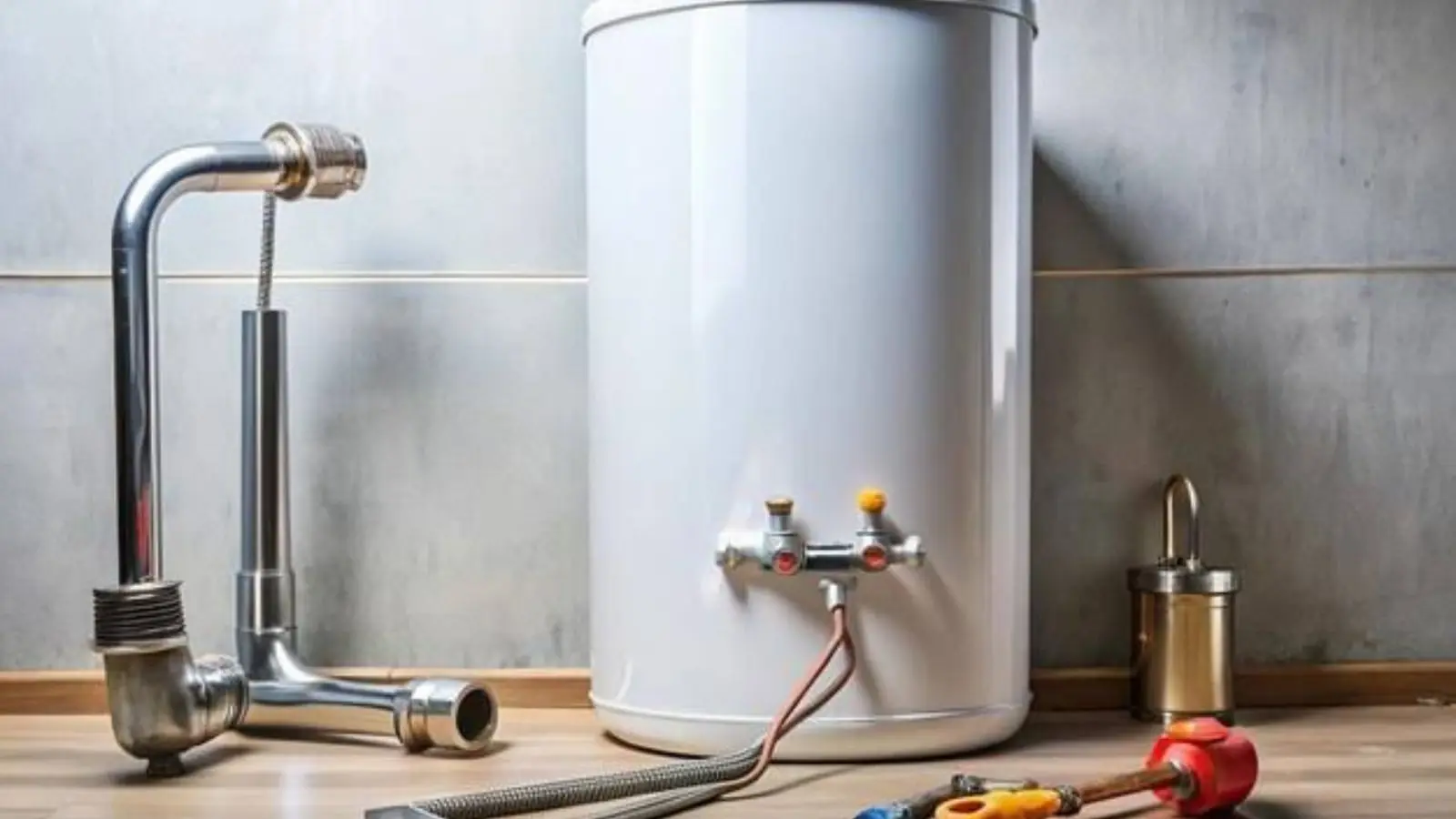
A water heater leak is a failure in the tank, a fitting, a valve or a connector that lets stored water escape. Water heater leak cleanup covers the part that comes next: pulling the water out of the closet, garage or utility room, checking the walls and floors around it and drying everything that got wet. The 24/7 line takes these calls because tanks tend to fail at the worst hours.
How water heaters leak
A tank that has corroded through leaks from the bottom or sides and cannot be patched. Leaks at the top usually come from a supply connector, a loose fitting or the temperature and pressure relief valve. A drain valve that weeps can also leave a steady puddle. Each cause releases a different amount of water, from a slow drip to the full tank.
A tank holds a lot of water, and a failure can send all of it across the floor in minutes. Water that touches drywall wicks upward, and water that reaches a shared wall keeps traveling. EPA guidance names 24 to 48 hours as the window for drying soaked materials, and that window opens with the first drip.
Replacement can involve local rules. Yucaipa's Community Development staff can tell you whether a heater swap inside city limits needs a permit. The 2020 Census counts about 54,000 residents in Yucaipa, and city limits do not always match a mailing address, so ask before assuming. Homes in Calimesa go through the City of Calimesa building department instead.
Warning signs around the tank
| Warning | Possible cause | Action |
|---|---|---|
| Puddle around the base of the tank | A leak at the tank, drain valve or lower fitting | Close the cold water inlet and call |
| Rust streaks or flaking on the tank | Corrosion that may be near failure | Plan a plumber visit before it fails |
| Dripping or steam at the relief valve | High pressure or temperature, or a failing valve | Call a plumber, keep away from the discharge |
| Stained or soft wall behind the heater | Water has been moving into the wall | Call us, moisture is likely inside |
| Sudden loss of hot water with a wet floor | The tank has emptied through a leak | Close the inlet, switch off power or gas |
First-hour safety around a leaking tank
- Close the cold water inlet valve on top of the heater by turning it clockwise until it stops.
- For an electric heater, switch off its breaker, but only while standing on dry footing. Never stand in water to reach the panel.
- For a gas heater, a gas smell means you go outside and phone 911 or the gas company. Do not relight a pilot yourself.
- Stay clear of hot water. A leak from the relief valve can scald.
- Lift boxes and stored items off the wet floor, and photograph everything first.
- Call the line and say whether the heater is gas or electric and which rooms share a wall with it.
Gas and water
If you notice a gas odor, getting out of the house comes first. Skip the light switches and appliances, and make the call from outside.
How we clean up a water heater leak
Stop and extract
Once the inlet is closed, wet vacuums and portable extraction units remove water from the closet, garage or utility floor.
Map
Moisture meters and a thermal imaging camera check the shared walls, the floor edge and the rooms beside the heater.
Open
Baseboard comes off and wet drywall or insulation is cut out if the cavity stays wet.
Dry
Air movers and an LGR or desiccant dehumidifier dry the space until readings return to dry reference levels.
A plumber drains, repairs or replaces the heater, because we do not install or service them. The two jobs go smoother when the plumber knows we are drying the same room, and ask the coordinator if the plumber needs the closet clear. When the area is dry, water damage repair rebuilds the drywall and floor.
Heater leaking right now?
Call the 24/7 line and say whether the unit runs on gas or electricity. You hear what to do in the next few minutes, and scope and price are explained before anyone starts work.
Cost factors in a heater leak cleanup
- How much water the tank released and how long it sat.
- The flooring around the heater, since carpet and pad cost more to remove than tile.
- Whether the wall behind the heater needs cutting out.
- Drying days with air movers and dehumidifiers, driven by readings.
- The rebuild afterward, including baseboard, paint and flooring.
Want your real number? Call (909) 505-3870. We lay out the price before any drying equipment is placed.
Insurance and heater leaks
A sudden tank rupture is the kind of event homeowners policies often cover for the water damage it causes. The heater itself is usually treated as a maintenance item, and a slow leak that went unnoticed may not be covered at all. Talk to your insurer before choosing what to claim, and keep photos, receipts and the plumber's invoice.
ANSI/IICRC S500 is the published reference for water categories, and tank water that sat in a closet for days is judged against it when wet drywall and flooring are sorted into dry in place or remove.
Prevention, and mistakes with an aging tank
- Do not ignore a small puddle. A tank leak does not seal itself, and it gets worse.
- Do not turn off the cold inlet and leave the heater powered, since an electric element can burn out dry.
- Ask a plumber about a drain pan with a line, and about the age and anode of an older tank.
- Do not pile stored items against the heater, where a leak can go unseen.
- Do not wait for the water to dry on its own. Damp drywall behind the heater keeps spreading.
If the leak spread across the house, the first step is often emergency water removal, and homes in Redlands get the same response. Check your water bill for your provider if you need to find the main shutoff.
Water Heater Leak Questions
Yes. Tanks fail at night and on weekends, so the 24/7 line covers holidays too. The line works through calls in the order they come in and cannot promise an arrival time, so close the cold water inlet while you wait.
No. A plumber repairs or replaces the heater. We extract water, check the surrounding walls and floors and dry them.
Yes, if you can do it safely. Close the cold inlet, and for an electric unit switch off the breaker from dry footing. For gas, go outside and phone 911 or the gas company if you smell it.
Farther than it looks. Water can pass under a closet door, wick into drywall and reach a hallway or bedroom. A moisture meter finds it.
It depends on the policy. Sudden damage from a rupture is often covered, but the heater itself and slow leaks often are not. Ask your insurer before you file.
Still have a question?
Call the 24/7 emergency line and ask. Scope and price are explained before work starts.