
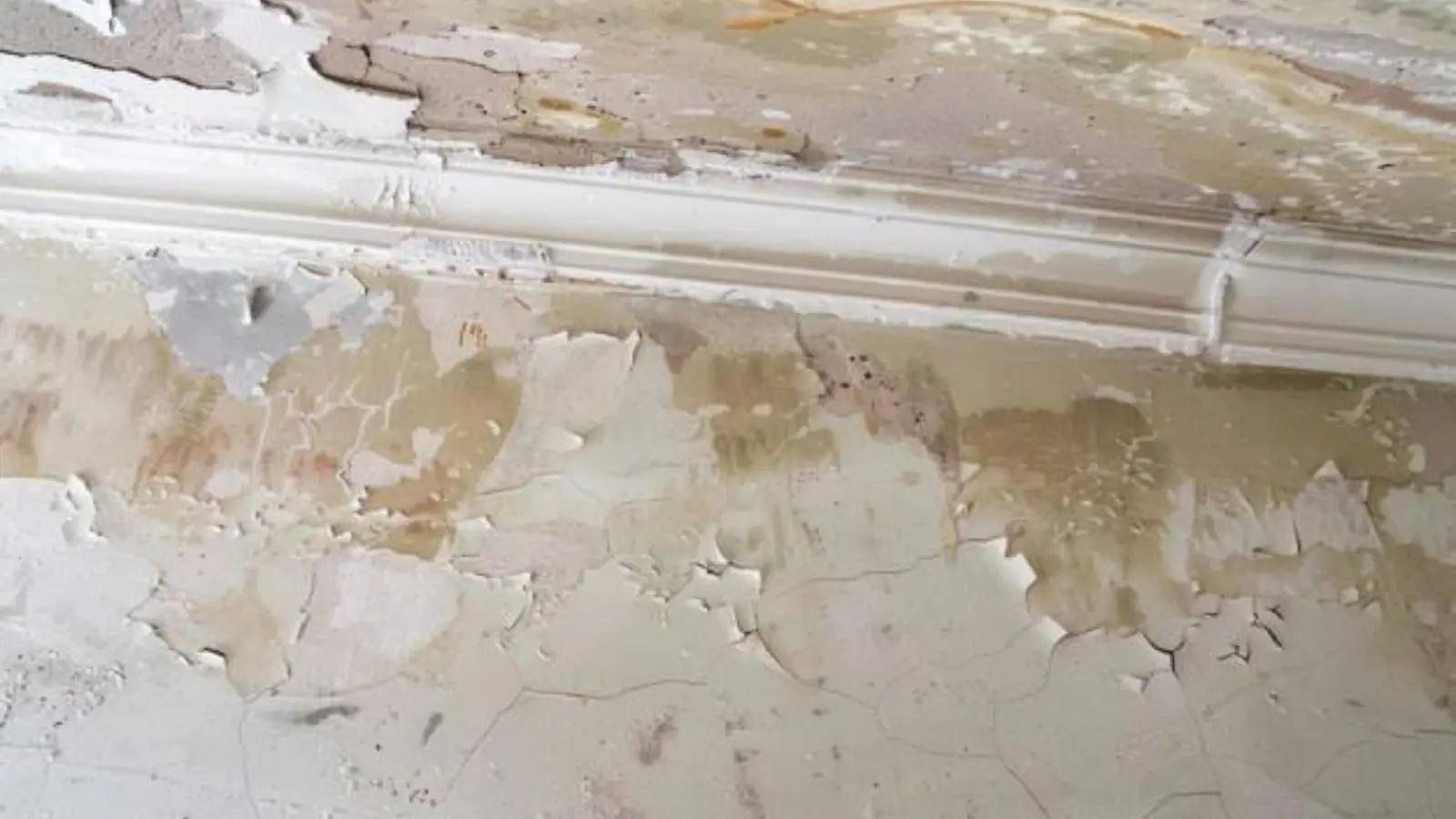
What water does inside a wall
A wall is a sandwich: paint, drywall, a cavity holding framing, wiring, pipes and often insulation, then drywall again or an exterior layer. Water entering at any point travels down the cavity and soaks the lowest materials first. The bottom of the wall and the baseboard are usually wetter than the stain you see higher up.
In Yucaipa, wall damage mostly traces to plumbing: a supply line in the wall, a shower valve, a washing machine box, or a leak from the floor above. Winter rain can also run down an exterior wall after a roofline or window problem. Yucaipa sits at about 2,600 feet, so wall cavities here generally stay on the dry side until a leak changes that.
Drywall is gypsum between paper faces. Gypsum softens when wet, paper feeds mold, and wet insulation can stay damp for weeks. A cavity can hold water without a visible mark, which is why a stain on the wall tells you where to look, not how far it has gone.
Signs a wall is wet and what each one suggests
| What you see or feel | What it suggests | Next step |
|---|---|---|
| Bubbling or peeling paint | Moisture behind the surface for some time | Moisture mapping to find the edges |
| Swollen or soft baseboard | Water at the bottom of the wall | Remove the baseboard and check the lower drywall |
| Brown ring or tide mark | Repeated wetting and drying | Find the source before repairing |
| Cool, clammy section of wall | Evaporation from wet materials | Thermal imaging to outline it |
| Musty smell near a wall | Wet cavity materials | Open a small inspection hole and take readings |
A single reading does not tell the story. Technicians take readings at several heights and compare them against a dry wall in the same home, so wet is measured against what normal looks like in your house.
Safety around a wet wall
Stop the leak, then think about wiring. Shut the fixture's own valve or the house main, and switch off any circuit that runs through the wet wall. Outlets and switches in a soaked wall can short, so do not touch them with wet hands or stand in water near them.
Do not cut into a wet wall yourself near wiring or pipes. If a wall is bulging with water, a small hole at the bottom can release it, but that is a job where gloves, eye protection and a clear head matter. When in doubt, call and describe it. When a wet wall sits close to the breaker panel, contact 911 or the electric utility before touching anything.
Sagging drywall can fall
Wet drywall is heavy and weak. Keep people and pets out from under a sagging or bulging section, and do not push on it.
How we handle a wet wall
Map
A thermal camera and a moisture meter outline the wet area on both sides of the wall.
Open
Baseboard comes off, and small inspection holes or a flood cut open the lower cavity where readings stay high.
Remove what cannot dry
Wet insulation and crumbling or delaminated drywall are bagged and removed.
Dry and confirm
Directed airflow and dehumidifiers dry the cavity, sometimes through the opened wall, until readings match a dry reference wall.
The crew is licensed and insured, and the scope is explained before work starts. A flood cut, a straight horizontal cut a set height above the floor, lets air reach the cavity and keeps the removal to the damaged part of the wall instead of the whole sheet.
Wall stained, soft or bubbling?
Describe the wall and the nearest plumbing to the coordinator on the line, and the first visit gets planned around it.
Dry, patch or replace
| Condition | Usually | Why |
|---|---|---|
| Wet but firm, readings falling | Dry in place | Drywall that keeps its strength often recovers |
| Soft, crumbling or swollen | Cut out and replace | Gypsum that lost strength does not regain it |
| Wet insulation | Remove | Insulation holds water and dries slowly |
| Stained but dry and firm | Seal and repaint | Stains are cosmetic once the cause is fixed |
| Wall stayed wet for a long time | Open and look further | Longer wetting reaches framing and finishes |
Once the cavity is dry, the rebuild belongs to the repair phase. Water damage repair covers new drywall, taping, texture and paint, and structural drying explains the equipment and monitoring that come before it. If staining or a musty smell remains after drying, mold remediation covers the next question.
What changes the cost of wall water damage
- How long the wall stayed wet and how far the water traveled.
- How many linear feet of drywall and baseboard come out.
- Whether insulation has to be replaced.
- Drying days and the equipment kept on site.
- Texture matching, taping and paint after the wall is closed.
Want your real number? Call (909) 505-3870 and describe the wall. Expect the plan and the figure up front, before a single cut is made.
Insurance fit and permits
A pipe that fails in a wall is often a sudden and accidental loss that policies cover, while a slow drip or neglected leak is often treated as gradual damage. Water from outside the house is a separate flood question. Pull up the wording of your coverage, or phone your agent, before you count on a claim.
ANSI/IICRC S500 is the published reference for deciding whether a wet wall cavity can be dried in place, and the readings inside the cavity matter more than how the paint looks.
Permits depend on the city or county. Yucaipa's Community Development staff can say whether a wall repair needs a permit. Homes in Loma Linda go through the Loma Linda Community Development Department, and Mentone is unincorporated, so Mentone homeowners ask San Bernardino County.
Mistakes to avoid
- Painting over a stain before the cause is fixed and the wall is dry.
- Sealing a wet wall behind new drywall.
- Ignoring the baseboard, since swollen trim is an early warning.
- Replacing only the visible patch without checking the cavity.
- Cutting into a wall near wiring without knowing where it runs.
Wall and Drywall Water Damage Questions
Yes. Day or night, a coordinator picks up, asks about the wall and the plumbing behind it, and books the next free crew. If every crew is busy you are told so, with no promised arrival time.
Sometimes. Firm drywall that was wet briefly often dries in place. Drywall that is soft, crumbling or has stayed wet for a long time is usually cut out. Readings decide, not looks.
A flood cut is a clean horizontal cut made at a set height above the floor so the wet lower section of drywall can come out. It keeps the removal limited and gives air access to the cavity.
Because the stain only shows where water came out. The cavity can hold wet insulation and framing. A small inspection hole confirms that before the wall is closed.
Our drying and removal work leads into repair. New drywall, taping, texture and paint are part of the repair stage, which is explained on the water damage repair page.
Still have a question?
Call the 24/7 emergency line and ask. Scope and price are explained before work starts.