
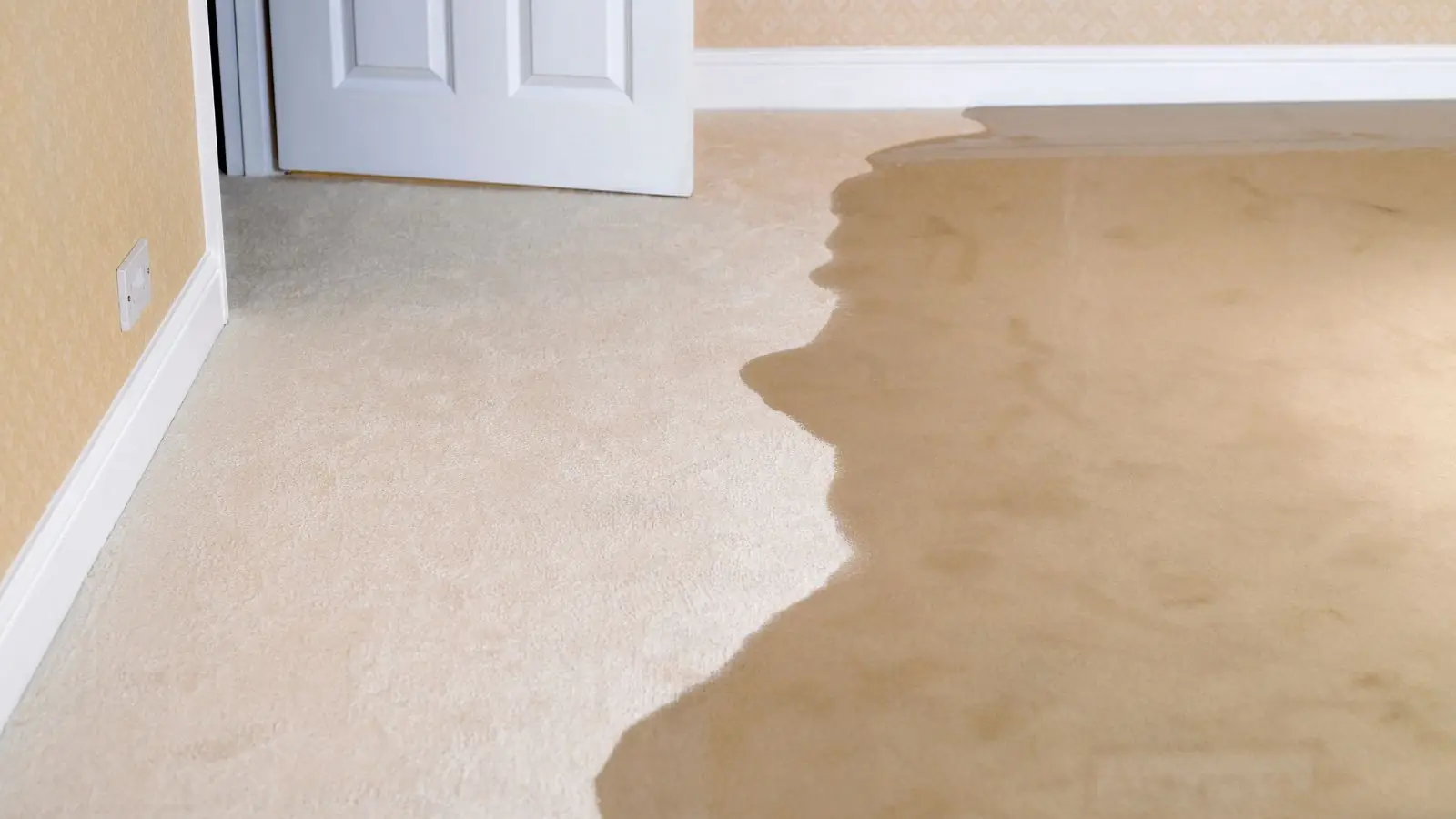
Why carpet water damage is a decision, not a guess
Carpet looks like one material, but it is three layers: the fibers on top, a backing, and the pad below. Water reaches the pad quickly, and the pad holds moisture long after the surface feels dry. That is why a carpet that looks fine two days after a leak can still be damp enough to cause trouble.
Yucaipa homes see carpet water damage from supply line failures, water heater and appliance leaks, roof leaks that soak a ceiling and drip down, and the occasional sewer backup. Rain is mostly a winter event here, and summers run hot and dry, so the cause is usually something inside the house rather than the weather. Knowing the source tells us which water category we are dealing with.
The published industry standard, ANSI/IICRC S500, sorts water into three categories. Category 1 is clean supply water, Category 2 carries significant contamination, and Category 3 is grossly contaminated, such as sewage. Your answer to one question decides most of the plan: where did the water come from, and how long ago?
Carpet by water category
| Category | Typical source | What usually happens to carpet |
|---|---|---|
| Category 1 | Supply line, water heater tank, appliance supply hose | Carpet is often saved and dried in place if caught early, and the pad is often replaced |
| Category 2 | Dishwasher or washer discharge, aged Category 1 water | Carpet can sometimes be cleaned and dried, but the pad usually comes out |
| Category 3 | Sewage backup, floodwater, rising groundwater | Carpet and pad are removed and discarded, and the floor beneath is cleaned |
Clean water does not stay clean. Water that sits for a day or two in carpet and pad can move up a category as it picks up dirt and organic material. EPA moisture guidance sets a target of one to two days for drying soaked building materials, which is why the first call matters more than the first cleaning product.
Safety first when carpet is soaked
Stop the source, then think about electricity. Shut the nearest fixture valve or the house main, and leave the breaker off for any room where water has reached outlets or power strips. Do not run a household vacuum on wet carpet, because it is not built for water and can shock you.
If the water came from a sewer or a drain that backed up, treat it as contaminated. Keep people and pets off the carpet and out of the room. Wear gloves and boots if you must cross it, and wait for a crew with protective gear.
Do not walk on soaked carpet in your socks
A saturated carpet over a concrete slab or a wet subfloor can hide electrical cords and standing water. Use shoes with a rubber sole, or stay out until the area is safe.
How we dry carpet in place
Find the edges
Meters and thermal imaging show where water spread beneath the carpet and into the wall base.
Extract the water
A weighted extraction wand pulls water from the carpet fibers, and a truck-mounted or portable unit does the heavy removal.
Lift and treat the pad
The pad is cut out in the wet zone, the tack strip edge is checked and the floor below is cleaned and sanitized.
Dry the structure
Centrifugal and axial air movers work under the lifted carpet with an LGR dehumidifier running nearby, and daily readings track the carpet edge, the subfloor and the baseboard.
Where the carpet is salvageable, a technician folds it back so air moves beneath it, which dries the backing and the subfloor much faster than leaving it flat. Floor mat systems can also pull water from below on certain surfaces. The crew is licensed and insured, and everything is explained before work begins.
Carpet soaked and not sure what to do?
Say where the water started and how long it has sat, and we will say what can wait and what cannot.
When carpet is saved and when it goes
| Question | Leans toward saving | Leans toward replacing |
|---|---|---|
| Water category | Clean supply water | Sewage or floodwater |
| Time since the loss | Caught within a day or two | Sat for several days |
| Pad condition | Dried or swapped quickly | Soaked through and stained |
| Carpet age and backing | Intact backing, tight seams | Delaminating backing or loose seams |
| Subfloor | Concrete or sound wood, readings falling | Wet wood with readings that stay high |
What changes the cost of carpet water damage
- Water category, because contaminated water adds protective gear and removal.
- Square footage of wet carpet and pad.
- Whether the carpet is dried in place or removed.
- Days of air movers and dehumidifiers on site.
- Replacement carpet and pad once the room is dry.
Want your real number? Call (909) 505-3870, and the plan and price reach you in plain words before we start.
Insurance fit for wet carpet
A supply line that bursts overnight is the sort of sudden and accidental loss homeowners policies often cover, while slow seepage over weeks may be treated as gradual. Sewage backup coverage is often a separate endorsement, and rising water from outside belongs to a standalone flood policy. Ask your insurer how your coverage reads, and do not count on approval until they confirm.
Take date-stamped photos of the wet carpet before it is moved, keep a sample piece if the carpet is removed and write down the room size. Your water bill names your provider if the water came from the supply side. For a sewer backup, the provider also runs the sewer, so sewage backup cleanup is the page to read next.
Neighboring towns follow the same pattern. Crews cover Mentone and Beaumont along with Yucaipa, and the same questions about water category and time apply there.
Mistakes to avoid
- Steam cleaning wet carpet, which adds heat and moisture without removing what is underneath.
- Leaving furniture on wet carpet, since wood legs stain and the pad stays wet beneath them.
- Keeping the pad because the carpet looks fine.
- Using a wet vacuum from the hardware store as the only drying step.
- Covering a damp carpet area with a rug or new furniture.
Carpet Water Damage Questions
Yes. Someone staffs the line around the clock, explains how to protect the carpet and sends the next open crew. Nobody can promise an arrival time, so ask about the wait when you call.
No. Clean water caught early often can be, and the pad is commonly replaced. Sewage and floodwater carpet is discarded, and carpet that sat wet for days may have a delaminating backing that will not recover.
Pad soaks up water like a sponge and holds it, so it keeps the carpet backing and the subfloor wet. Replacing it is often the cheapest way to prevent bigger problems later.
A moisture meter gives a number for the carpet edge, the pad area and the subfloor, and we compare them against dry readings from an unaffected part of the home. Feel alone is not enough.
Our work is the water side: extraction, drying and removal. Once the room is dry, a carpet cleaner or flooring installer handles final cleaning or replacement.
Still have a question?
Call the 24/7 emergency line and ask. Scope and price are explained before work starts.