
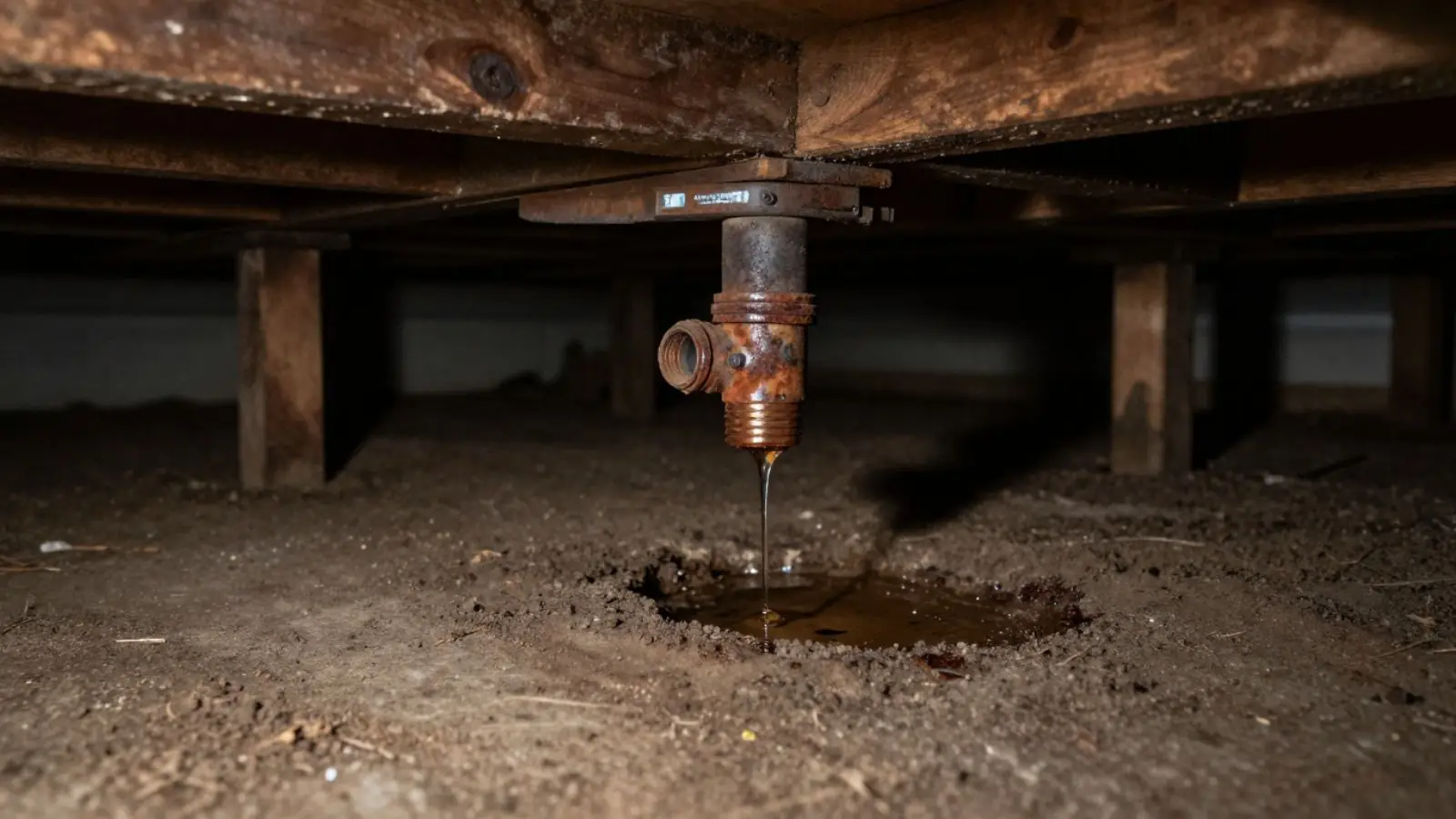
Crawl space water damage cleanup in Yucaipa means getting standing water, soaked insulation and wet framing out from under a raised floor before it climbs into the subfloor above. Homes on raised foundations have this space, and homes built on a concrete slab do not. We cannot say what share of Yucaipa homes have crawl spaces, so the first question we ask is whether yours does.
Crawl space water hides well, and that is the danger. The first sign is usually a bouncy floorboard, a sticking door or a musty smell near the vents. While you wait for the crew, shut off the main water valve if a pipe is the suspect, keep the access hatch closed and do not climb in yourself.
First-hour safety before anyone enters a flooded crawl space
A wet crawl space combines tight quarters, low light and wiring that often runs along the joists. Water and electricity are a bad mix anywhere, and doubly so in a space where you cannot stand up. If any wiring hangs in the water or a light fixture sits below the water line, dial 911 or the electric company first and stay out.
- Do not enter a crawl space that holds standing water, and never go in alone.
- Turn off power to the area at the breaker only if you can reach the panel on dry footing.
- A gas odor near the hatch means everyone goes outside and dials 911 or the gas company.
- Photograph what you can see from the hatch with a flashlight, then close it.
- Gray, dark or foul-smelling water counts as contaminated, so read sewage backup cleanup instead.
How water gets under Yucaipa homes
Rain here is a winter event. Yucaipa's Mediterranean climate and elevation of roughly 2,600 feet bring long dry summers and a wet season that can load a foundation in just a few storms. Crawl space water tends to arrive in two ways. A plumbing leak runs for weeks unseen, or a heavy winter storm sends runoff toward a low foundation vent. If your yard drains toward the house, the first big storm will tell you.
Older houses carry their own risks. In Redlands, where Victorian-era homes are part of the town's historic character, older plumbing and finishes can hide a slow drip for a long time. If you own an older home anywhere in the area, a quick look at the crawl space after the first storm of the season catches problems while they are small.
The utility on your water bill, or a plumber, can point out where the main shutoff sits. Find it before you need it, because the shutoff is the first move when a pipe under the floor lets go.
Clues you can spot from the rooms above
| What you see | What it may mean | Next step |
|---|---|---|
| Soft or spongy floor boards | Wet subfloor or joists from below | Call so moisture meters can map the floor |
| Musty smell near floor vents | Damp insulation or wet soil under the house | Check the hatch from outside and call |
| A higher water bill and nothing new in the house | A supply line leaking under the floor | Shut off the main and call a plumber and us |
| Sticking doors or cracked tile | Moisture is moving the framing | Call before the damage spreads |
| Sagging insulation in the crawl space | Insulation soaked and pulling away from the floor | Photograph it from the hatch and call |
How we clear and dry a crawl space
Access and assess
A technician checks the hatch and the space for electrical hazards, then measures the water depth and finds the source.
Pump out
Compact submersible pumps and hoses fed through the hatch remove the standing water. Wet vacuums clear the low spots the pump cannot reach.
Remove wet insulation
Soaked batts hold water against the subfloor and do not dry in place. They come out and are bagged.
Dry and prove it
Fans and dehumidifiers matched to the volume of the space run for days, with meter readings on the joists and subfloor before anything leaves.
Once the water is out, the crew checks the subfloor from below and, where it is accessible, from above through a thermal imaging camera. That tells us whether the flooring in the rooms overhead is wet too. If it is, the job continues into water mitigation for the living space above.
A vapor barrier on the soil and drainage that keeps water away from the foundation are jobs for a general contractor or a drainage specialist. Restoration repairs the damage after the water has been and gone. It does not stop water from coming back.
Water under your house?
Pick up the phone and tell the coordinator what the hatch shows. The first instructions come on that call.
What changes the cost of crawl space cleanup
- Depth of the water and the size of the crawl space, which set the pumping time.
- How tight the access is, because a small hatch or low clearance slows every task.
- Whether insulation, a vapor barrier or ducting has to be removed.
- Days of drying and the number of air movers and dehumidifiers the space needs.
- Repairs above the floor if the subfloor or flooring was reached.
Want your real number? Call (909) 505-3870 and the price is laid out in writing before work begins.
Insurance and crawl space water
A sudden pipe failure under the floor is often the kind of loss homeowners policies cover. A slow leak that ran for months and storm runoff that came in through a vent are treated differently, and flood generally needs its own policy. Have your policy handy when you speak to your insurer, and keep damaged material until they release it.
ANSI/IICRC S500 is the published reference for classifying water by category, and water that has sat over crawl space soil is treated as more than clean supply water when materials are judged.
EPA guidance on moisture control says to dry wet materials within 24 to 48 hours, a window that is easy to miss when the wet area sits where nobody looks.
Mistakes to avoid with a wet crawl space
- Climbing in to look around without knowing where the wiring runs.
- Leaving wet insulation in place because the surface looks dry.
- Closing the vents and hatch tight and hoping the space dries on its own.
- Laying new flooring above before the subfloor has been measured dry.
For standing water in a garage or living space, emergency water removal is the better starting page. Homes in Calimesa and the rest of our area reach the same crews through the same line.
Crawl Space Water Questions
Yes, at any hour of the night or day. Crews head out in order of need as they free up. No arrival time is promised, and a delay is stated on the call.
No. Homes on a concrete slab have none, and we cannot say what share of local homes have one. Ask us on the call and describe the access hatch or vents.
No. Restoration cleans and dries after water has entered. Stopping water from coming back is a job for a drainage specialist or a general contractor.
Spongy boards, a musty smell or a jump in your water bill are clues, but only moisture meters and thermal imaging confirm it. A technician takes readings from below and above.
Soaked batt insulation holds water against the subfloor and usually does not dry in place. It is removed and replaced after the framing has dried.
Still have a question?
Call the 24/7 emergency line and ask. Scope and price are explained before work starts.