
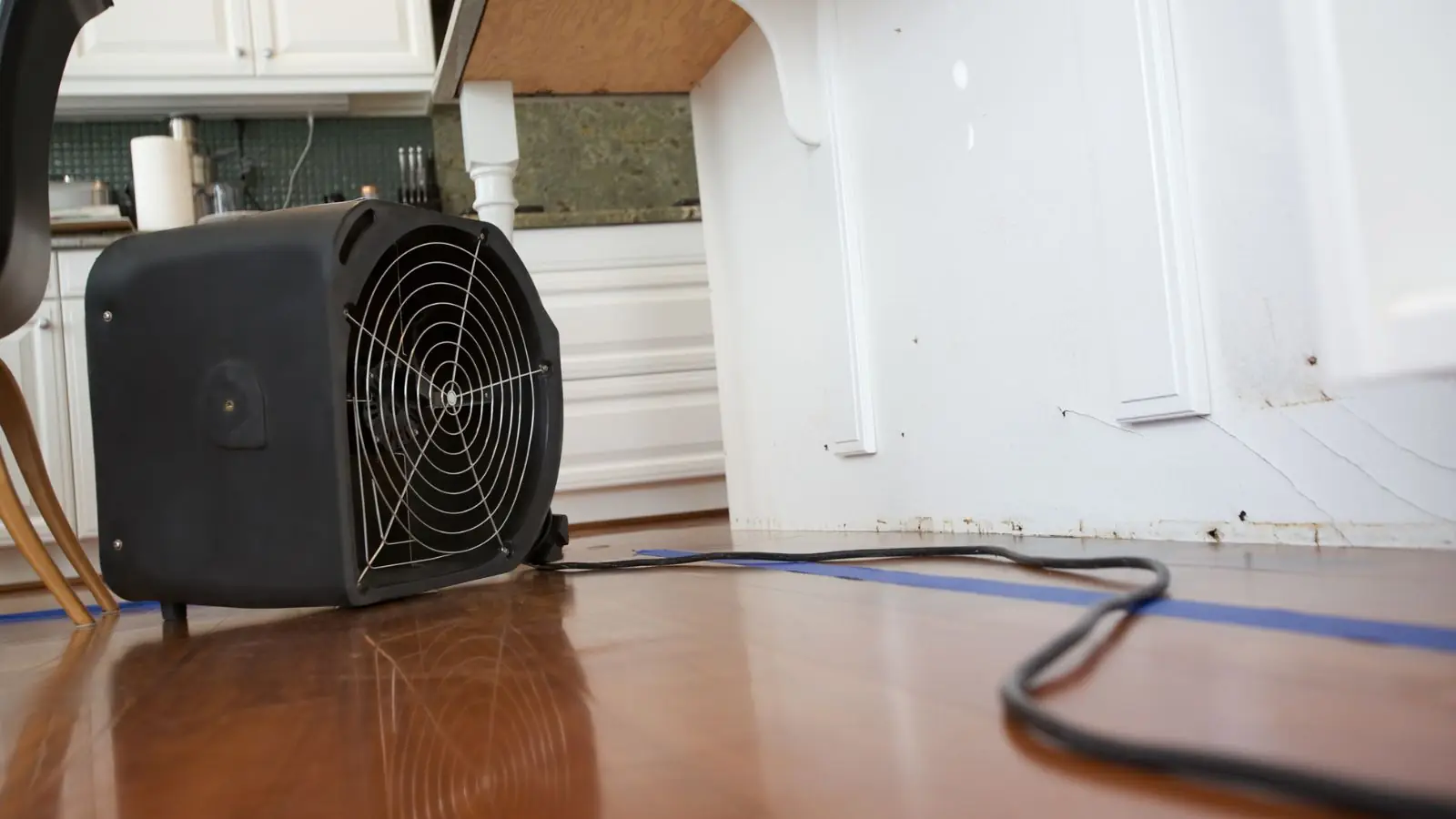
How kitchen water damage starts in Yucaipa homes
Kitchen water damage in Yucaipa usually starts small and quiet. A dishwasher drain hose loosens, a sink supply line weeps behind the cabinet, or an ice-maker line cracks behind the refrigerator. The sink base, the dishwasher bay and the fridge all sit against walls or under counters, so the water spreads out of sight long before a floor looks wet.
Yucaipa sits at about 2,600 feet in San Bernardino County, with a Mediterranean climate where most rain falls in winter. That means kitchen losses here come mostly from indoor plumbing and appliances rather than from weather. The practical takeaway: look under the sink and behind the dishwasher on a regular schedule, because a slow drip never announces itself.
Cabinet bases are the hidden victims. Particleboard bases swell and crumble once they stay wet, while plywood and solid wood tolerate a wetting better. Which kind you own decides whether the base can be dried in place or has to be replaced, and a technician can usually tell by touch and by a moisture reading.
What the kitchen is telling you
| What you notice | Likely cause | What it means |
|---|---|---|
| Floor cupping or lifting beside the dishwasher | Slow leak at the drain hose or door seal | Water has moved under the flooring, so readings are needed before anything is covered |
| Soft or swollen toe kick under the sink | Water inside the sink base | The cabinet bottom may need removal to dry the floor beneath it |
| Musty smell when you open the sink cabinet | A long-running drip | Materials stayed wet, so look behind the cabinet back and the wall |
| Stain on the ceiling below the kitchen | A supply line or drain above | Find the water path before anyone patches or paints |
| Puddle behind the refrigerator | Cracked ice-maker or water line | The line may have leaked for days into the floor and wall base |
Safety steps for a wet kitchen
Stop the flow before anything else. Close the small angle valve under the sink, the dishwasher supply valve, or the main valve for the house if you cannot find the local one. Open a faucet at the lowest point to bleed what is left in the line, then call the dispatch line.
Kitchens have outlets at counter height and low behind appliances, so treat any wet floor as an electrical question. Unplug an appliance only if its cord and the outlet are dry and you can reach both without stepping in water. Should water reach an outlet or the breaker panel, stay out and phone 911 or the electric utility.
Gas range or oven nearby
A gas smell near the range means leave the kitchen, then call 911 or the gas utility once you are outdoors. Leave switches and pilot lights alone. Our line stays open until you are safely outside.
Photograph the wet area, the appliance and any damaged cabinet before anything is moved. Move food and small items off the floor, and keep children and pets out of standing water.
How a kitchen gets dried
Find and map
A pin-style moisture meter and an infrared camera trace water along toe kicks, cabinet backs and the wall behind the sink and appliances.
Extract
Portable extraction units and wet vacuums lift standing water from tile, vinyl and the open floor.
Open the hidden spaces
Toe kicks come off, the dishwasher bay panel is lifted, and small vent openings go into cabinet bases. Drywall is cut only where readings stay high.
Dry and monitor
Axial air movers push air along the cabinet bases while an LGR dehumidifier pulls moisture from the room, and a technician logs readings each day until each material reaches its dry goal.
Hardwood and engineered floors that took water from below often respond to mat drying systems that pull moisture up through the boards. Tile over a wet subfloor is trickier, since the surface looks fine while the layer beneath stays damp. Readings, not appearances, decide when the equipment leaves.
| Material | Often dried in place | Often removed |
|---|---|---|
| Plywood or solid wood cabinets | Yes, with vented bases and airflow | Only if swollen or delaminating |
| Particleboard cabinet bases | Rarely | Usually, once they swell or crumble |
| Hardwood floor | Often, if caught early | Boards that cup and stay cupped |
| Vinyl or tile flooring | The surface, yes | Underlayment that stays wet |
| Drywall behind the sink | When readings fall quickly | Sections that stay wet or crumble |
Water in the kitchen right now?
Call now, tell us which valve you closed and what is wet, and we will talk through the next hour with you.
What changes the cost of kitchen water damage
- How long the leak ran, since a slow drip over weeks reaches more material than a burst line stopped in minutes.
- Cabinet type and how many base units were wet.
- Flooring type, and whether it can stay put while it dries.
- Number of drying days and the equipment kept running.
- How much drywall, insulation or trim has to be removed and rebuilt afterward.
Want your real number? Call (909) 505-3870, and you see the plan and the price on paper before any machine starts.
Insurance fit for kitchen leaks
A supply line that bursts or a hose that fails suddenly is the kind of sudden and accidental event homeowners policies often cover. A drip that ran for weeks before anyone noticed is often treated as gradual damage and may not be. Water that comes in from outside usually falls under a separate flood policy. Your policy language and your insurer have the final word, so wait for their answer before counting on a payout.
ANSI/IICRC S500 is the published reference that sorts kitchen water by category, and a dishwasher drain leak is judged differently from a clean supply line leak.
EPA moisture guidance says to dry wet building materials within 24 to 48 hours, which is why cabinet bases and toe kicks are opened early instead of being left to dry on their own.
Keep the failed part if you can, photograph the area before cleanup and write down each damaged item. Our written scope includes moisture readings and an equipment log, which gives your insurer a clear record of what was wet and for how long.
Permits and rebuild questions
Drying is rarely a permit question, but rebuilding cabinets, plumbing or electrical in a kitchen can be. Before that rebuild starts, ask Yucaipa's Community Development staff what the City requires. Redlands homeowners start at the One Stop Permit Center, and Calimesa homes answer to their own city building department. (Redlands details are on its page.)
Once everything is dry, the rebuild phase of water damage repair covers new drywall, base cabinets, flooring and paint. If the water came from a long hidden leak in a machine, appliance leak cleanup explains how that source is handled.
Mistakes to avoid
- Covering a wet floor with new flooring or a rug before readings show it is dry.
- Running a household fan and calling it done, which moves air but does not remove moisture from cabinet bases.
- Pulling out the dishwasher by yourself while the supply line is still live.
- Throwing away the failed hose or valve before your insurer has seen it.
- Waiting for a stain to appear, since hidden kitchen water often shows up last.
Kitchen Water Damage Questions
Yes. A coordinator answers the dispatch line day and night, explains how to hold the water back and sends a crew as soon as one has room. If the schedule is full you will hear that straight away, and no arrival time is promised.
Often, if they are plywood or solid wood and were wet only briefly. Particleboard bases that swell or crumble usually have to be replaced. A moisture reading and a look at the cabinet bottom settle it quickly.
Water travels under flooring and behind cabinet backs, so the surface can feel dry while the layers below stay wet. A thermal camera and moisture meter find those spots without tearing anything apart first.
It depends on what got wet, but drying is measured in days rather than hours. Equipment stays until the readings reach the dry goal for each material, and your technician explains the target.
Usually not. Air movers and dehumidifiers are loud and warm the room, but the rest of the home stays usable. If the water was contaminated, keep people and pets out of the affected area.
Still have a question?
Call the 24/7 emergency line and ask. Scope and price are explained before work starts.